
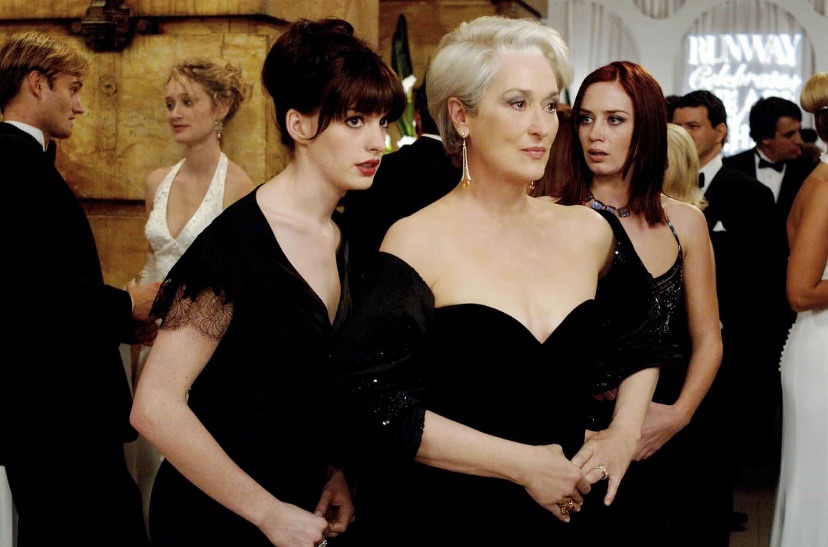
Imagine you actually start trying at your job to succeed, but you receive no support from your close ones…
Hollywood really hit it big in the 2000s, holding up a slew of successful films that are uncertified classics. A large portion of these are without a doubt romantic comedies, with a handful being the most memorable (Legally Blonde, 13 Going on 30, The Proposal) – among these, in one of my personal favourites, is the 2006 fashionably quotable The Devil Wears Prada, headed by both Hollywood royalty Meryl Streep and rom-com leading lady Anne Hathaway.
The film acts as a tongue-in-cheek piece on the fashion industry, particularly the work environment of it evident through high-profile publications like Vogue. Hathaway plays Andy Sachs, an aspiring journalist who finds herself acquiring the job “a million girls would kill for” – junior assistant to Runway’s editor-in-chief Miranda Priestly, a businessman who runs her business with a firm, manicured, iron fist. As Andy constantly tries to either please or survive the designer-clad authoritarian that is Miranda, she soon learns that climbing a ladder to your own aspirations includes effort in the pathway – aka, her job at Runway.
So as she starts wearing Louis Vuitton, attending to Miranda’s needs with no hesitation, and even outdoes her job description (more on that below), she learns to grow as a person, learning valuable lessons which lead up to her vital decision in the film’s climax (thanks to Miranda’s schemes, of course). Unfortunately, not every character is mature enough to support her, even if it’s her romantic partner and closest friends…
The actual villain is Nate, the boyfriend
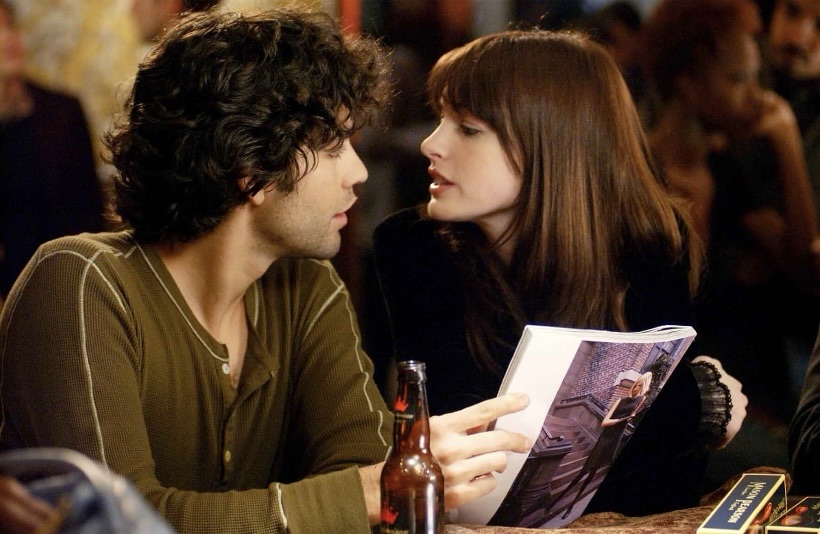
Anyone who has seen the movie knows where I am going with this. Andy’s boyfriend, aspiring sous-chef Nate (played by Entourage’s Adrien Garner), is completely unsupportive, judgmental, and sulky once his girlfriend stops her complaints about something that has depth to others and actually starts putting in the work to get to her own goals. In fact, all of her friends are. One particular scene features Andy giving her friends lavish items that come as benefits of being Miranda Priestly’s assistant, like a Marc Jacobs bag to best friend Lily (played by Rent’s Tracie Thoms). They are thankful and repay her, right? Wrong.
Instead, when Miranda calls, they hijack Andy’s phone and start a game of catch despite her protests. Doing this could have cost Andy her job, the one that means she can give them free stuff. When she leaves angry, they look confused as if she are the problem. Another moment of the film depicts Andy missing out on Nate’s birthday to attend a gala benefit as Miranda’s second plus one, which, of course, he is displeased about. The thing is, however, a birthday can be celebrated anytime and is a recurring thing. The gala benefit was a one-time opportunity for Andy to continue working her way up the ladder. Nate could’ve been perfectly understanding that Andy needed to skip over his birthday to do this, but instead whines about it.
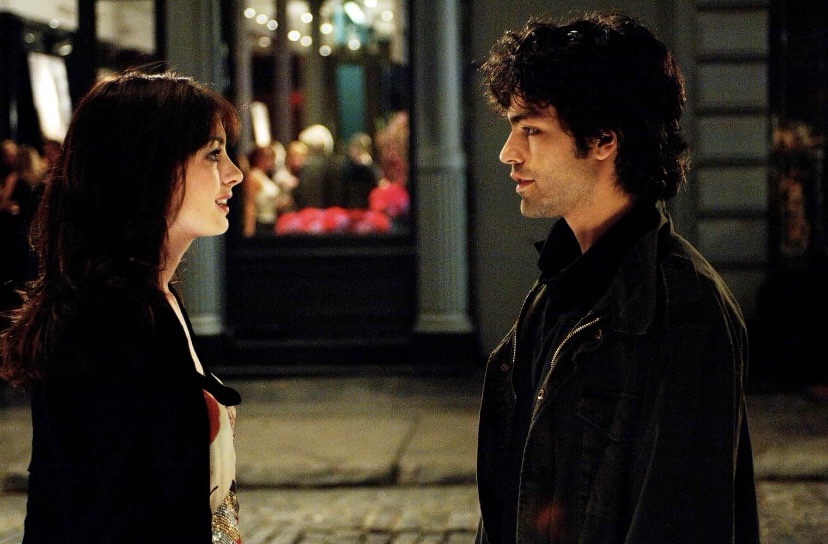
Another reason why Nate brings down the whole mood is that the times he is supportive is when Andy chooses to quit, but immediately goes back to judging her if she decides it is rather better to stay. Any loving partner would support any decision, and yet Nate only supports the ones that benefit him. Best friend Lily is also no further saint, as she immediately judges Andy after seeing Christian Thompson (played by The Mentalist’s Simon Baker) give a rather simple kiss on the cheek, the type friends do. One of the film’s final scenes include Andy and Nate, who spent the third act broken-up, having a rather amicable conversation where Nate reveals he is moving to Boston for a new job. His implication that “we could make something work” is a tad confusing, as I think Andy’s character arc is only flawed by him and they are better off alone. But still, his vague hopes that she may still want him, after being a completely critical, uncooperative partner for a majority of the film is the cherry on top of his character.
The film gives the empathy to Miranda’s trusted employees Emily & Nigel

Of course, the film’s attempts to give empathetic feelings toward Andy as a character don’t exactly succeed themselves. Given that she showed up for a job application completely unprepared, with no knowledge on the publication or person she was working for, Andy doesn’t hit as relatable right off. This is also furthered by the fact that, despite being new at her job, she loudly snickers at their fashion opinion on two accessories, not really bothering to either keep quiet or act respectful to something that although she finds insignificant, is a dilemma to those who actually base their life on it (this leads to Meryl Streep, as Miranda, delivering a stellar monologue on Andy’s sweater, calmly putting her in her place for her snickering).
And even though Miranda is the villain on the film’s surface, running her fashion empire with a brutal sense of fear and stress, she has once very significant scene herself; donning a puffy, natural face and simple night robe for her eyeliner and lipstick features and high-fashion items, she relays to Andy at how she feels with a new divorce on her hands, being perceived as a tyrant, and the worrying effect she has for her daughters because of it. Meryl Streep plays Miranda a whole new person here – a broken, vulnerable woman navigating herself. You actually feel empathy for Miranda of all people here, and realise that she is more complex than you realised. Of course, she is still the spare-no-expense Miranda Priestly, however, with her actions toward Nigel – coming to the two characters whose empathy actually does matter.
Nigel Kipling, played by the ever-so-versatile Stanley Tucci, is the only Runway employee Miranda puts her trust in, always accepting his opinion and often working as her unofficial co-editor-in-chief. For someone with a razor-sharp tongue, Nigel is the movie’s likable character, being Andy’s one and only confidant from the moment she starts working at Runway. He gives her the wake-up call she needs, provides her with the Cinderella Chanel makeover, and confides in her with his true feelings: it appears that, in his 18 years at Runway, he has sacrificed every aspect of a life until there is nothing and the magazine and Miranda are his whole personality. As he puts, “it’s time for a promotion when your whole life goes up in flames.”
So he arrives at Andy’s hotel room in Paris, enthusiastically telling her that the up-and-coming James Holt (played by Daniel Sunjata) has made him partner of his own fashion brand, and therefore free of Runway at last and being able to reclaim his life. It is an emotional moment for both the audience and Andy watching his excitement for a new start, as it is out-of-character for all his previous scenes. But the hopefulness is cut short – because Nigel is not the new president of James Holt International. It is Jacqueline Follet, the French Runway editor-in-chief who Miranda – the only person who ever trusted Nigel – recommended.
The revelation that Miranda was aware that Jacqueline Follet was going to take her job, and Miranda offered up Nigel like the unknowing lamb to save herself is shocking and invokes a sense of empathy to Nigel and disbelief to Miranda. Nigel spent over 15 years giving his absolute everything to her and Runway, and the hope of another chance wasn’t given to him, then ripped away like a cruel prank. Andy conveys the audience’s frustration at this toward Miranda, stating she could never do that to someone. But Miranda, knowing better, says she already did to Emily, the other empathetic character.

Emily Charlton, played impressively by Emily Blunt in her first big role, is Miranda’s senior assistant who works herself into the ground to please her boss. She is immediately dismissive of Andy and gives her a cold attitude, which in her perspective is understandable. She doesn’t think Andy can get the job done, because of her lack of experience, and she is mostly right. But once Andy starts trying, she accidentally does it too good and starts usurping Emily. The senior assistant runs Miranda’s schedule and appointments, while the second assistant runs errands for fashion items and Starbucks. Soon enough, the roles are reversed that Andy runs the schedule and Emily runs the errands, an unfair demotion to the latter.
Always seen running around the office or giving constant pep talks that she loves her job, Emily is the prime example of a stressed workaholic trying to get to their own dream – in case, it’s Paris Fashion Week with Miranda. Emily’s whole workload in the film is based on her trip to Paris in the year and she even goes to extreme lengths to prepare: notably, diets that seem way too dangerous they can be attributed to eating disorders. Seeing Andy, someone who didn’t even know Miranda Priestly during her interview, do Emily’s job better than her despite being there months is a little upsetting for Emily. And it all comes to a head that Emily’s effort was for nothing – Miranda wants Andy to go with her to Paris instead. Andy knows this very much will undo Emily, but is led to believe there is no choice. And so she tells Emily the news from a hospital bed – because, by coincidence, Emily was hit by a taxi hours earlier. To harden the blow.
The climactic scene where Andy says she could never do what Miranda did to Nigel and Miranda corrects her using Emily is wholeheartedly true. Despite what Andy believed, she chose to con Emily out of her hardworking position to climb the ladder further, hurting her deeply in the process. This is as Emily lies, recovering in a hospital bed, eating large amounts of food, devastated. It was all for nothing because of someone who wasn’t even there a year. This is, of course, vital to Andy’s immediate decision – abandoning Miranda, throwing her phone into a fountain, and leaving Runway and fashion altogether.
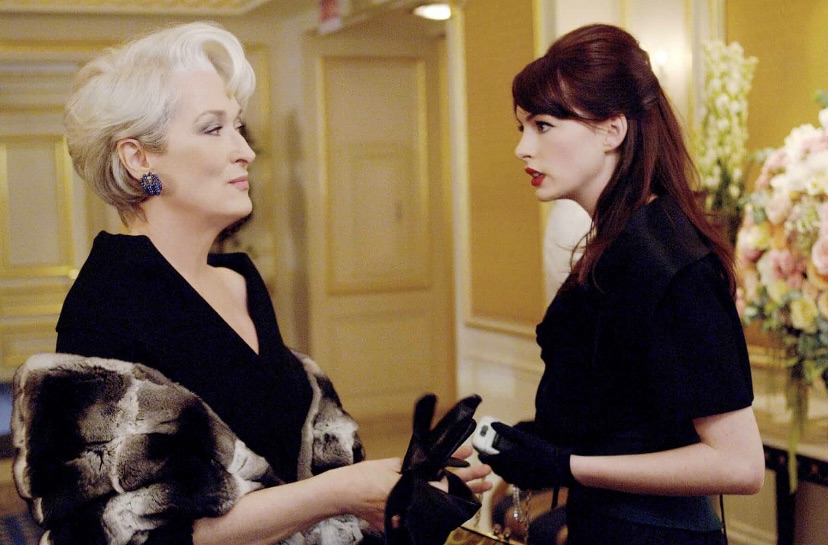
So, in conclusion, The Devil Wears Prada is a movie with more depth than people may realise. Is it quotable? Yes. It is hilarious? Yes. But it is a well-written exposé on how the fashion – and perhaps, work – industry costs you everything, whether it being effort, goals or your own life (most of that is thanks to Nate as a person, however). It is one big journey where you can enjoy the plot, suffer through any scene with Nate, or feel deeply for Nigel & Emily’s misfortunes despite their dedication.
 Cinematic Dive
Leave a comment