
You either are a star, or you ain’t – My new favourite motto…
In my experience of being a lifelong filmgoer, there is more-than-often that one character that can dazzle on the surface, but really shine in their depth-ridden truth. You only need to rely on a masterclass-level screenplay and acting performance to really sell it, and although there are more than at least three handfuls of these characteristic examples, there is only one that I find particularly compelling – if only, the film basis wasn’t a polarising one.
Damien Chazelle is no stranger to a filmmaker conveying deep emotions through a message in their work, a notable example being his Oscar-snatching musical romance La La Land back in 2016 (maybe worth an analysis on its own. Wait and see…). Back in 2022, he gave another shot with a brilliant exposé on the decadently-glamourous, destructively-dazzling environment of old time Hollywood and the harm of its evolution in Babylon. This flick, maintaining a runtime just over 3 hours, didn’t sit too well with critics and the box office. This I honestly find scarcely credible, since I see its flaws as necessary to its story, message, and ensemble cast of characters – like the ambitious starlet Nellie LaRoy, played exceedingly by Margot Robbie (yes, Barbie), who is the film’s central example to its story. And the real-life connections coming with it.
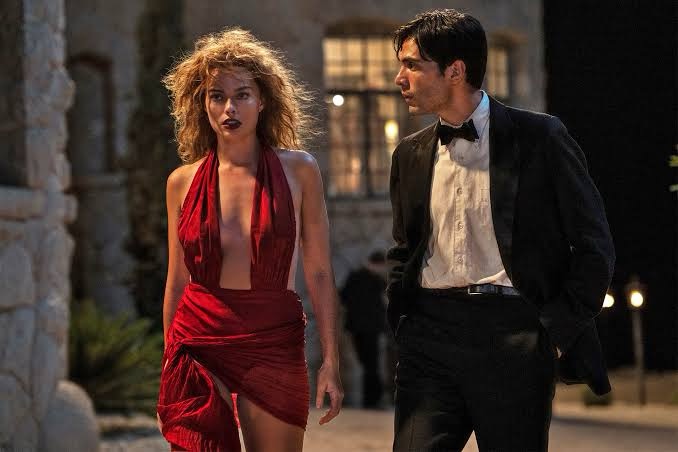
First, you have to fully understand the feel and look on Nellie LaRoy, as well as the basis that gave her the necessary traits. The very first moment we see her, she recklessly crashes her automobile into an old, expensive garden statue – probably of good value. “Well, that came out of f*ckin’ nowhere…”, she quips with total carelessness, showing how she doesn’t give one thought about the wealthy, valuable stone antique because it represents her uncaring attitude toward anything of high quality. Draped in a red-velvet minidress reminiscent of a Greek toga, hair an unhinged, bushy mess reminiscent of Julia Roberts in Pretty Woman, heavily-accented Jersey slang – everything about her screams tacky, slightly raunchy, but with every bit of intrigue and shine, because that’s what Nellie wants. She is a star, after all.
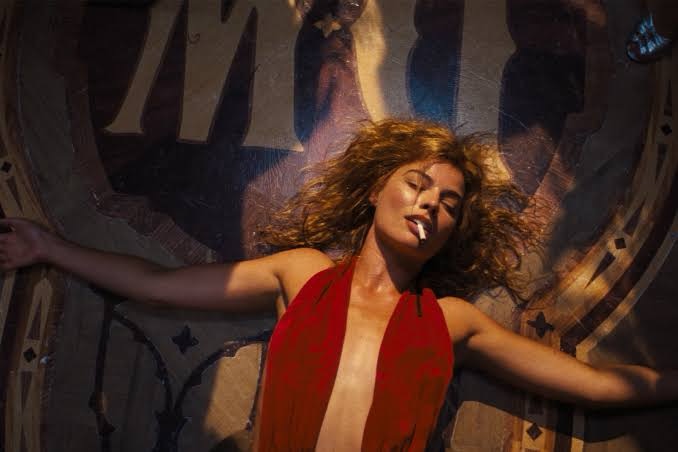
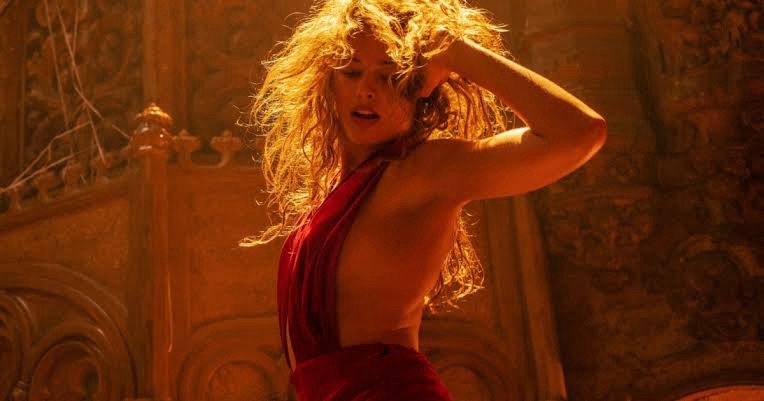
The Tarzan-like, unkempt state of her bronze hair and skimpy, gaudy attire, corroborated by her trashy, improper Jersey accent and brashly risqué dialogue, make it too hard to ignore her. Like she proclaims, she is a star. The character of Manny Torres (Diego Calva) is immediately enamoured like us, not taking his eyes off of Nellie as she makes her presence known in the midst of the debauchery and chaotic celebrations, through a dance simultaneously enigmatic, sensual and hyperactive at once.
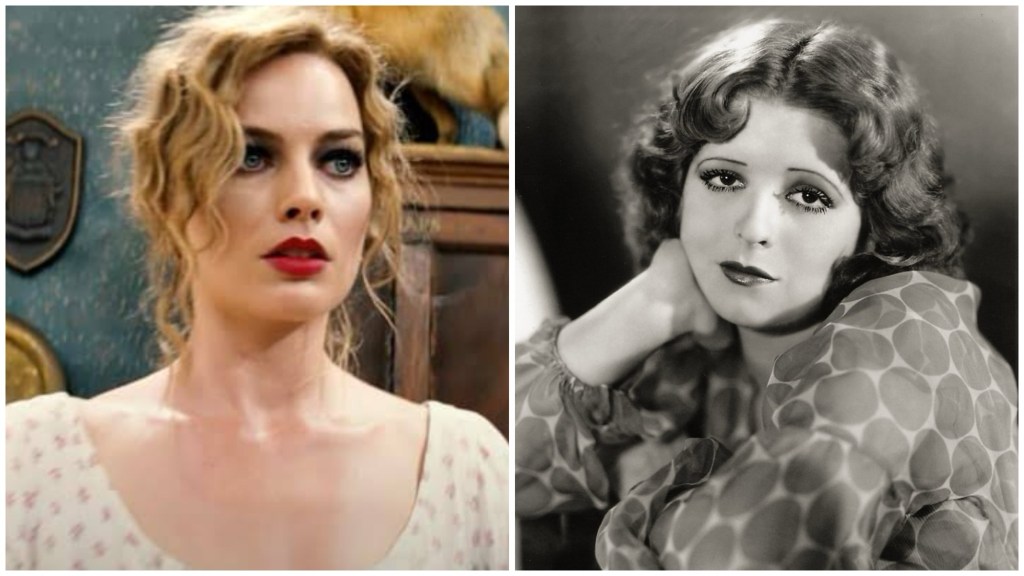
The basis the character emanates is, with no doubt, derived from one of Hollywood’s original “it girls” Clara Bow, whose sex symbol status was more pervasive than any other actress in the 1920s before Jean Harlow emerged. Like Nellie’s own background explored in the film, Bow suffered from a dreadful childhood, full of a lack of education, neglect and abuse, not to mention also having a rather broad voice (although, not like Nellie’s Jersey accent) and known for the ability to cry on cue – a trait given to Nellie during the scene of her first film shoot in the film (her explanation? She thinks of being home).
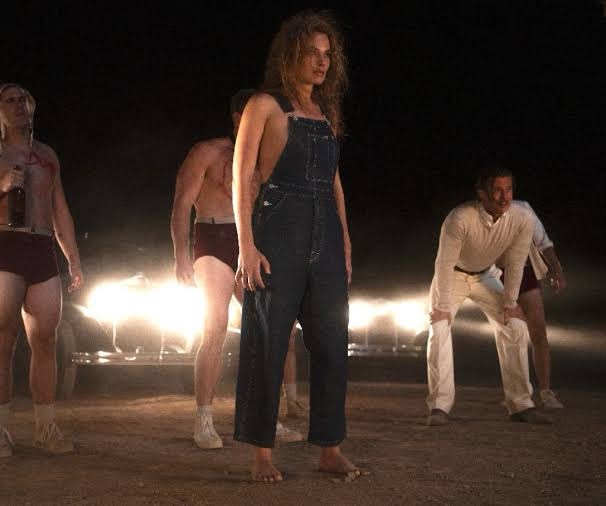
The storyline’s sequence of the film industry’s transition from the silent-film era to sound pictures (“talkies”, they called it) following The Jazz Singer in 1927 gives some pretty telling moments to Nellie’s character, too – like the drawn-out scene of a disastrous, stressful first-day shoot of a “talkie”. Nellie is either too loud, barely audible or keeps missing her mark, the first signs of her career downfall (the aforementioned film is later mentioned to be a flop). She proceeds to suffer criticism for her voice dialect (“She sounds like a frog”, or to that extent), messy lifestyle and tawdry image (Hollywood, at this point, was converting to proper morals than libertines).
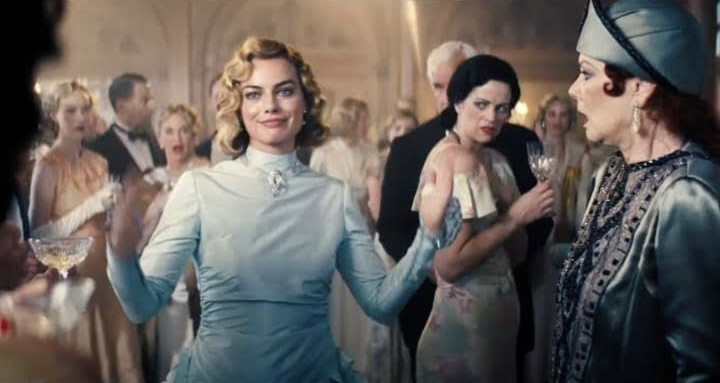
Clara Bow was also an infamous silent film actress who switched to talkies – the scene Nellie films is reminiscent of Bow’s entrance into her first talkie, 1929’s The Wild Party. The difference is, Bow’s transition was more successful than Nellie’s and she had a few good years in her talkie era, but the elite society of Hollywood’s higher-class was never fond of her. This is perfectly portrayed when Manny and glamourous gossip columnist Elinor St. John (Jean Smart) try to help Nellie rebrand herself as a prosperous, sophisticated actress with good manners and upright posture. Unfortunately, Nellie immediately sees the higher society silently ridicule her, and proceeds to risk her career on a racy tirade that ends with her projectile vomiting onto Randolph William Hearst. I can certainly say this is far from what happened with Bow, but Hollywood’s elite still rejected her as she was too provocative to include.
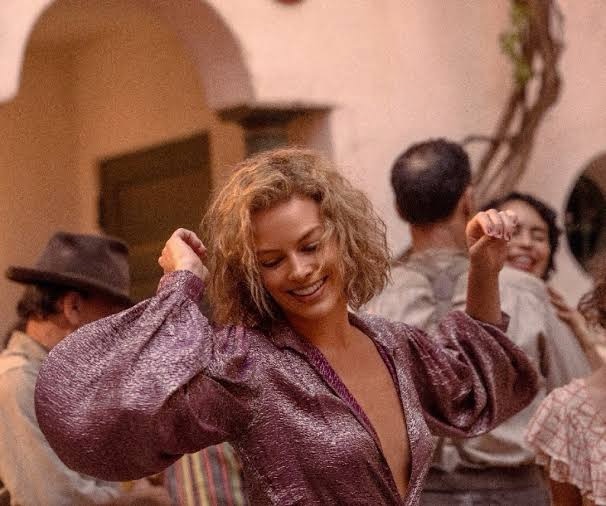
As for the look of Nellie, she, of course, is outfitted in revealing, flashy clothing most of the time, completed with her signature scruffy hair and bawdy body language. This perfectly depicts her as an improper, self-owning and unbalanced person who isn’t vulnerable to change and will get to the top – or slowly disappear – on her own accord. The brief period where she attempts to get into the ranks of high-society, she is not Nellie LaRoy. Her dishevelled hairstyle has been cut shoulder-length and turned into the era’s signature finger wave bob, she is outfitted in a sky-blue satin gown with frilly edges, glamourous jewellery and speaks with prissy-prim, faux-British manners. This getup goes completely against who Nellie is, and she isn’t a fan (“I look f*ckin’ ridiculous”, she replies to Manny after he pep-talks her). Of course, once she chooses to defy this attempt and remain the same-old “wild child”, she spends the rest of her screen-time in a halter-neck, knee-length light-magenta dress, sparkling with a matching baggy-sleeved blazer. Her hair also goes back to its untamed style, although now as the shoulder-length bob. This seems to reflect how, despite refusing to change her reputation, Nellie has now retained some type of appropriate-style from her training, as its one of her most-clothed and less-tacky-more-glam costumes. In other words, she now realises times are changing despite her inability to adapt morally.

And then, of course, there is the feel of Nellie – aka, the emotional depth behind her person. One critical scene in the movie features Nellie visiting her institutionalised mother in New York, not seeming too pleased at the implication that she does not know her. This is followed by Nellie’s confession to Manny in her true state – a saddened, lonely, angered person who knows no love or support. She was constantly told she was no good by everyone. She was rejected from acting for being “too fat” or “too ugly” (an impossibility with Margot Robbie, though). And they squirm at her behaviour because she wants them to – it’s her way to let them know she is living on her terms, and they never could, and never will, control her. It’s apparent here that Nellie, a decadent young woman with a provocative image, acquired this because of her heartbreak. She was always alone and told she wasn’t attractive or lovable no matter how hard she tried. So she became what they made her – an unhinged, immoral person determined to climb the ladder on their own, with seemingly no care at all on other opinions. Under that surface, though, is the real Nellie – the target of negativity from trusted ones, made worthless, broken and reckless. And Margot Robbie’s performance, showcasing her facial expressions, emotional tone, and pained eyes doesn’t leave a lack of excellence, in my opinion. And for the bonus, she has an all-too-relatable perspective on high-society and their clear snobbery, hidden debauchery.
Overall, the most convincingly crafted character Damien Chazelle portrayed in Babylon is Nellie, with huge assistance from Margot Robbie. She is the embodiment of every actual Hollywood starlet who had a dark truth, and almost always never made it out mentally healthy or alive (a newspaper sequences mentions Nellie’s death from a drug overdose toward the end). She steals almost everything with her pure presence, bright personality and moving character moments. And that, in my opinion, is what Babylon does right. Forget if the graphic content is necessary to its plot line – the true message of the movie is how captivating its figures within the story are conveyed.
 Cinematic Dive
Leave a comment